CSCA PREPARATION
How Long Do You Need to Prepare for the CSCA?

8+
weeks
Foundation
Which starting point sounds like you?
Three findings. A plan you can use.
Three research-backed habits to make your study time count.
Check what you can do
A physics study found perceived and actual learning differed. [07]
Try without notes. Check again another day.
Looks familiarTry without notes Make knowledge return
A classroom meta-analysis favoured practice spread across sessions. [03]
Bring old questions and corrected errors back.
LearnReturnUse again Plan the week you have
A survey of 324 students found deadlines drove study choices. [08]
Book the task, the study slot and the return.
TaskStudy slotReturn slot
First, find your CSCA starting point.
What can you actually do without your notes?
Try a representative question without notes. Sort the topic into one of three groups.
Secure
You can explain and solve it independently—even another day.
Maintain it with spaced, mixed practice.
Needs practice
You understand it, but accuracy, method or speed varies.
Repair the error. Retry later.
Needs rebuilding
The concept is still unclear.
Explain an example, then solve independently.
Start small. Check one topic first.
Pick
Pick one required topic and a related question.
Try
Explain and solve without notes. Mark where you get stuck.
Decide
Choose: maintain, practise or rebuild. Recheck another day.
Repeat across the required syllabus. More gaps mean more foundation time.
Which papers do you actually need?
Check the subjects required by your university and programme.
Each subject can be at a different stage. Give weaker papers more time; keep stronger ones in review.
How much study time can you protect?
Count the hours you can keep alongside school and applications. Include review.
SAME SIX WEEKS
Same six weeks. A different budget for practice and review.
What usually costs you marks?
Check the step that failed: concept, method, detail or pace?
The idea is missing.
Check the repair
Explain without notes. Solve a related question.
YOUR REPAIR ROUTE
- Study one worked example
- Explain each step
- Try without notes
Choose your CSCA preparation stage.
These windows cover your preparation from each starting point. Move between stages as your performance improves.
Foundation
START HERE IF
Major foundation gaps remain
WHAT TO PRACTISE
Example → explain → solve independently → revisit.
READY TO MOVE ON WHENYou can explain the concept and solve a related question independently.
Practice
START HERE IF
Most topics are familiar, but performance is inconsistent
WHAT TO PRACTISE
Find errors → repair → retry later → mix topics.
READY TO MOVE ON WHENYour corrected method works on a new question; repeated errors drop.
Exam Application
START HERE IF
Knowledge is mostly there, but exam application needs work
WHAT TO PRACTISE
Mix topics → add timing → track slow steps.
READY TO MOVE ON WHENYour pace improves while accuracy holds.
Mock & Final Review
START HERE IF
You are already close to exam-ready
WHAT TO PRACTISE
Full mock → review → repair → repeat.
READY TO MOVE ON WHENAccuracy and pacing stay consistent across full-paper practice.
Same six weeks. Different priorities.
Compare how the focus shifts within the same six weeks. Use your progress checks to decide when to move on.
- Foundation
- Practice
- Exam Application
- Mock & Final Review
I have gaps in the basicsMore concept building before heavy mock work.
I know it, but make mistakesRepair repeated errors and reattempt later.
I can solve it, but I am slowTimed mixed sets and pacing analysis.
I am already consistentMaintain consistency and review remaining gaps.
How to study for the CSCA.
Five study techniques you can use.
Match the method to the problem. Open an example when you want to try it.
Start with the method your problem needs.
- The concept is unclearWorked examples + explanation
- The same errors returnError review + reattempt
- You can solve it, but slowlyTimed mixed practice
Retrieval Practice
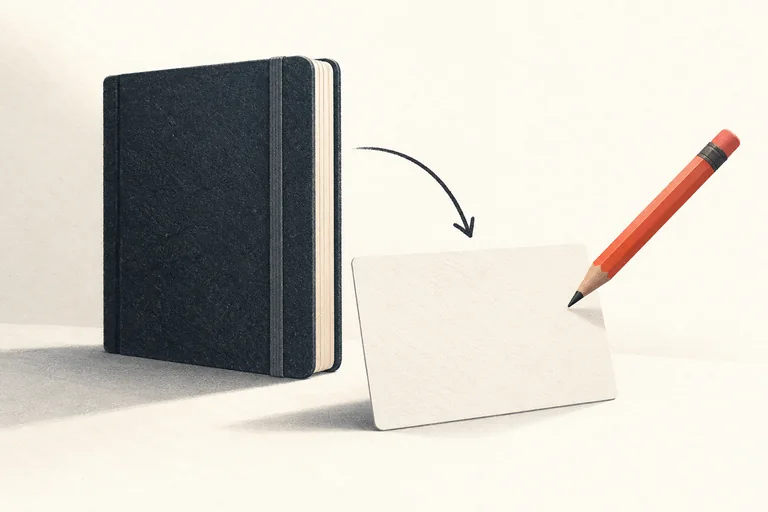
COMMON HABIT
Rereading or highlighting without testing yourself
MAKE IT USEFUL
Recall or solve before opening the answer. Then check and correct.
Use it on material you have already learned. [02]
Try it on your next question
WHY THIS HELPS
A familiar solution is not the same as a solution you can produce. Recall a formula, explain a principle or revisit an old question before checking the answer.
Take a formula or question you have already studied.
Close
Put the notes and worked solution away. Write what you remember.
Attempt
Use the idea on the question. Mark the step where you get stuck.
Check
Compare with the solution, explain the gap, then schedule another attempt.
CHECK YOUR PROGRESSCould you produce the idea before looking? If not, repair that specific gap rather than rereading everything.
Spaced Practice
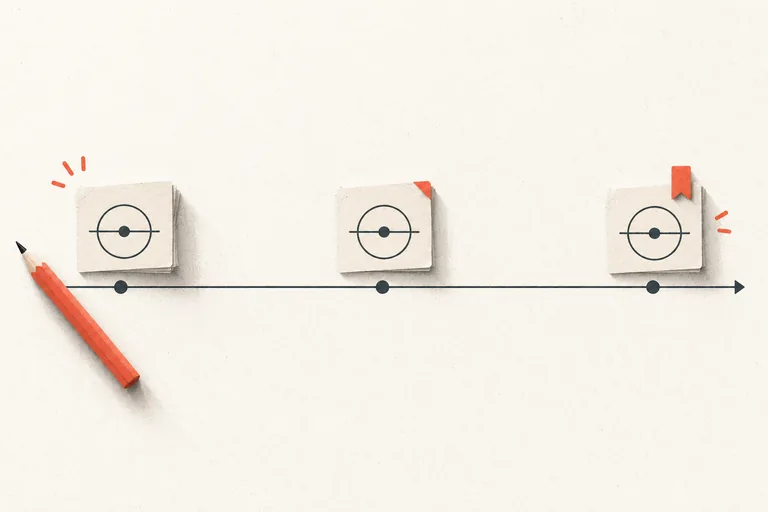
COMMON HABIT
Finishing a topic once
MAKE IT USEFUL
Revisit without the solution. Bring old topics and important errors back.
Struggling? Return sooner. Remembering reliably? Extend the gap. [03]
Try it on your next question
WHY THIS HELPS
Finishing a topic once should not remove it from your plan. Formulas, important methods and corrected mistakes need to return across separate sessions; they do not all need flashcards.
Make the same idea return in a different context.
Learn
Understand the method and practise it today.
Return
In a later session, retrieve it without the solution.
Transfer
Try a new question, then include the idea in mixed practice.
CHECK YOUR PROGRESSCan you still use it later? Adjust the next return to your recall, rather than following one fixed interval for every topic.
Interleaving
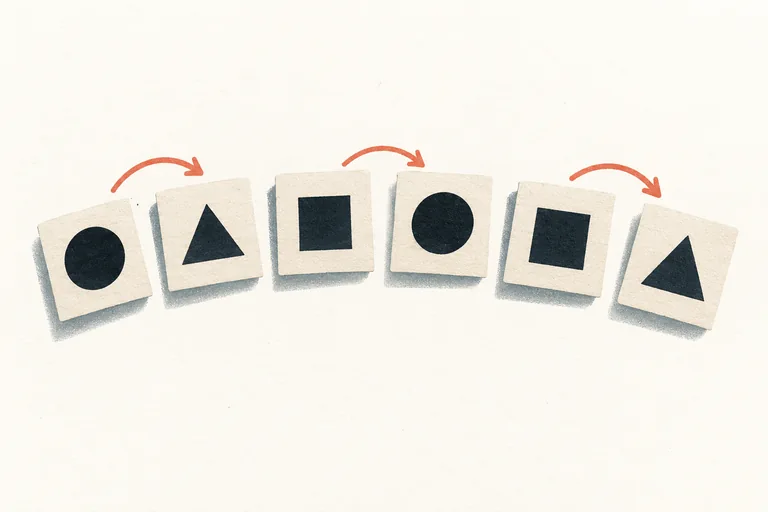
COMMON HABIT
20 predictable questions in a row
MAKE IT USEFUL
Instead of A → A → A, try A → C → B. Choose the method yourself.
Learn each topic before mixing it. [04]
Try it on your next question
WHY THIS HELPS
A whole block from one chapter tells you which method to use. Mixed questions make recognising the problem part of the work. Begin after individual topics are reasonably secure.
Change the order. Keep the reasoning.
Understand
Repair unclear concepts before mixing them.
Practise
Start with A → A → A → B → B → B while learning each method.
Mix
Move to A → C → B → A → D → C. Name the clue before solving.
CHECK YOUR PROGRESSCould you explain why this method fits this question? A correct answer alone does not show whether you recognised the right approach.
Worked Examples
COMMON HABIT
Copying the solution
MAKE IT USEFUL
Explain each step. Cover the solution and reproduce the reasoning.
Reduce support as you improve. [05]
Try it on your next question
WHY THIS HELPS
When the foundation is weak, a worked example makes the reasoning visible. Explain why each step follows, which principle it uses and what would change if the question changed.
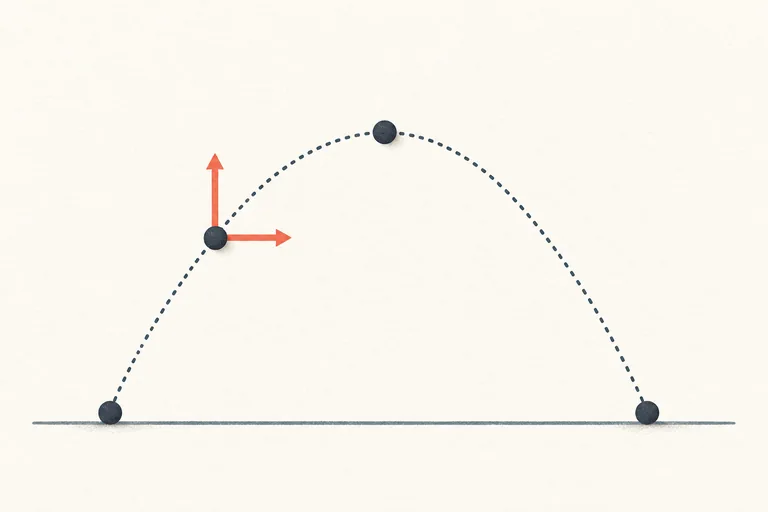
Use the projectile example: horizontal and vertical motion need separate reasoning.
Explain
Why this method? Why this step? Which component belongs in the equation?
Cover
Hide the solution and reproduce the reasoning in your own words.
Vary
Attempt a related question with less support. Explain what changed.
CHECK YOUR PROGRESSCould you reproduce the solution independently and adapt it when the question changes? Gradually remove support as that becomes reliable.
Error Review
COMMON HABIT
Writing “wrong”
MAKE IT USEFUL
Name the cause. Repair it. Schedule a retry without notes.
Always leave time to review. [06]
Try it on your next question
WHY THIS HELPS
A mock without review mostly measures performance. A useful review names the cause, changes the next task and brings important mistakes back without the solution.
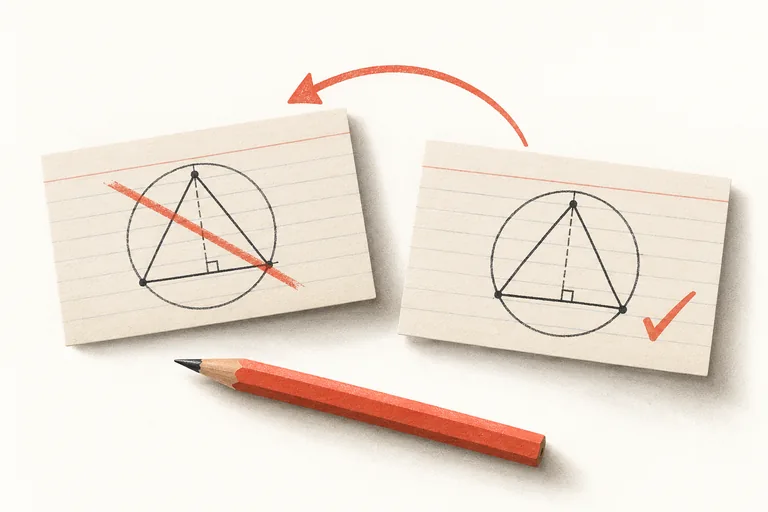
Replace “Question 17 — wrong” with a repair route.
Diagnose
Name the concept, method, accuracy or timing problem.
Repair
Relearn the idea, compare methods, add a check or examine pacing.
Reattempt
Return later without notes. Repeated errors need another retrieval attempt.
CHECK YOUR PROGRESSDid the review change what you will practise next? Keep the error log as a tool for future improvement, not just a record.
Put the techniques into one study session.
One session, five moves. Tap each move to see what to do.
Find out what you can retrieve.
Retrieve
TRY THIS
Close your notes. Recall the formulas before you check them.
Could you produce the formula or idea before looking?
Finish with one clear decision: what will you retrieve or reattempt next time?
Leave with three useful things.
An independent attempt
Keep your attempt. Mark the step that blocked you.
A specific repair
Name the concept, method or checking step to fix.
A return appointment
Book a later retry. Begin without notes.
Turn a mistake into your next move.
A useful error log
- Question
- Projectile motion
- What happened
- Used horizontal velocity in the vertical equation
- Error type
- Method selection
- Fix
- Review component separation
- Re-test
- Retry without notes in 3 days
Retry in three days without the solution. Use the result to schedule the next return.
Is your remaining time enough for the CSCA?
Is eight weeks enough for the CSCA?
Room to rebuild, practise and apply. With major gaps across several subjects, begin earlier.
Is one month enough for the CSCA?
Best when most content is familiar. Prioritise weak topics and timed practice.
What if you have 21 days?
With a secure foundation, use timed mixed sets and error review. Follow a focused daily plan.
Can you prepare for the CSCA in two weeks?
Focus on final practice and review. Maintain strengths; repair the most important gaps.
When should you add timing and mocks?
Start with a timed set
Once you can solve independently, add a timer. Track pace and accuracy.
- Solve independently
- Add a timer
- Check pace + accuracy
Concept unclear? Repair it first. Keep timing stronger topics.
Move to a full mock
Move to regular full mocks once required topics are covered and timed mixed sets are reliable. Check pace and stamina, then review.
- Attempt a full paper
- Review the errors
- Repair before repeating
An earlier mock can locate gaps. Unlearned topics and recurring errors need targeted study before the next full paper.
How much time is left?
21 days
- 01Practise under time pressure
- 02Repair repeated errors
- 03Use a focused daily plan
If your foundation is secure, switch to a focused daily study plan.
See the 21-Day CSCA Study PlanPut your timeline together.
Your exam date + your starting point + the time you can protect.
Build My CSCA Timeline
Add your exam date, starting point, subjects and weekly hours.
Dates set the outline. Weekly hours set the budget. Your topic check sets the tasks.
Will your next week fit?
Example: six hours of maths and physics, spread across the week.
Move slots to fit your week. Keep the return sessions.
- Mon1hMaths
Explain → try
- Tue1hPhysics
Separate → solve
- WedBuffer
Move a slot here if needed
- Thu1hOlder work
Recall → mix
- Fri1hMaths
Try a different question
- Sat1hPhysics
Use the method again
- Sun1hReview
Repair → reschedule
- 2 hours
Repair one maths gap
Explain an example, then attempt a related question independently.
- 2 hours
Repair one physics gap
Separate motion components, then check your method on a different question.
- 1 hour
Bring older work back
Reserve a later study day. Retrieve a previous idea and mix in an older question type.
- 1 hour
Review and reschedule
Check errors, record the repair and choose what returns next week.
Use your actual pace to adjust.Compare planned time with actual progress. Too much work? Cut new topics, prioritise required gaps and protect review.
Missed a session? Keep the next step small.
Retrieve one idea
Begin with something you have learned. Try before checking.
Repair one error
Name the cause. Make the next attempt more specific.
Book its return
Choose the next slot. Move unfinished new work separately.
Resume with one small task. Move unfinished work to another slot. [08]
Your next week, on one page.
Before you leave, turn one required topic into a plan you can test.
One gap
Name the topic and the step that blocks you.
One attempt
Pick a matching method. Solve without the answer.
One return
Book a later slot and check what still works.
One adjustment
Use the result to change next week’s priority.
Frequently Asked Questions
When should I start preparing for the CSCA?
ANSWER
Start early enough for the gaps you currently have. Students who still need to rebuild major parts of the syllabus benefit from a longer preparation window, while students with stronger foundations can move sooner into structured practice and exam application.
What is the minimum time needed to prepare for the CSCA?
ANSWER
Choose a window from your starting point: 8+ weeks for rebuilding foundations, 4–8 weeks for practice, 2–4 weeks for exam application, or the final 1–2 weeks for mock review. Then match the tasks to your required subjects and weekly focused hours.
How many hours a day should I study for the CSCA?
ANSWER
Start with the focused study time you can maintain each week. Divide it across your study days, prioritise weaker required topics and reserve time for review. The six-hour weekly example in this guide shows how to put that into a timetable.
Is active recall useful for CSCA preparation?
ANSWER
Retrieval practice — often called active recall by students — has strong general evidence as a learning technique. For CSCA, it can be applied by recalling formulas, explaining concepts without notes, attempting questions before checking solutions and revisiting previously learned material.
Should I use spaced repetition for the CSCA?
ANSWER
Spacing learning across separate sessions is well supported by learning research. It can be especially useful for keeping formulas, principles, methods and previously corrected weaknesses accessible over time.
Should I mix different types of CSCA questions?
ANSWER
Once individual topics are reasonably secure, mixed or interleaved practice can help you practise recognising which method a question requires. If the concept itself is still unclear, learn and practise it first before heavily mixing it with other topics.
When should I start timed practice?
ANSWER
Start with question types you can solve without substantial help, then add timing to check method choice, pacing and accuracy. If an unclear concept is the main obstacle, repair that topic first.
When should I take a full mock?
ANSWER
Choose a full mock to check coverage, pacing and sustained work together, and reserve a separate review slot. Record the first result as your baseline. Repair and reattempt important errors, then use the next mock to track progress.
Should I take a mock every day before the exam?
ANSWER
More mocks are not automatically better.
A mock becomes useful when you carefully review it and allow the result to change what you study next.
Repeatedly taking tests without repairing the underlying errors can simply repeat the same weaknesses.